

Orbit & Operations: The December 2025 Review
December was a useful reminder that “space news” is often “systems news.” This month’s biggest stories weren’t just about hardware leaving the pad — they were about the operational maturity behind it: reliable insertion into Medium Earth Orbit for navigation infrastructure, scaled deployment of LEO broadband constellations, increasingly routine booster reuse and rapid launch turnarounds, and a steady drumbeat of science results that depend on tight calibration and disciplined end-to-end data pipelines. We also got a bonus: an interstellar visitor whose close pass translated into a real-world stress test of discovery-to-ephemeris workflows across the global observation network.
Ariane 6 Sends Galileo SAT-33 and SAT-34 to MEO

On December 17, 2025, two new Galileo satellites (SAT 33 and SAT 34) launched from Europe’s Spaceport in Kourou, French Guiana aboard an Ariane 6 in its two-booster configuration. The satellites separated from the launcher after just under four hours of flight and entered early operations and in-orbit testing prior to joining the operational Galileo constellation at roughly 23,222 km altitude in Medium Earth Orbit. The mission marked Galileo’s first launch on Ariane 6 and the fifth Ariane 6 launch overall.
The Systems Engineering
Navigation constellations are unforgiving of sloppy orbit delivery. Galileo spacecraft ultimately need carefully managed orbital plane placement and long-term station-keeping margins so the ground segment can maintain predictable PNT geometry and timing performance. This is why the details of the Ariane 6 profile matter: the upper stage’s reignitable Vinci engine and multi-burn capability allow a mission design that can explicitly manage energy, plane targeting, and injection accuracy rather than relying on a single impulsive “good enough” burn.
From an architecture perspective, Ariane 6’s modularity (two or four boosters) is a classic reliability-and-cost trade: keep a common core and upper stage while scaling the liftoff impulse to match mission class. For Galileo, the two-booster configuration is a straightforward example of sizing the launch vehicle to the payload while still preserving adequate performance reserves for disposal. Disposal is not a footnote: moving the upper stage to a stable graveyard orbit after separation is part of the overall debris-mitigation system, and it has to be accounted for in propellant budgeting, guidance logic, and mission timeline management.
The other non-obvious engineering takeaway is operational: navigation spacecraft are “critical infrastructure in orbit,” which makes launch cadence, ground processing, and predictable integration flows just as important as propulsion. Successful deliveries like L14 are not only about engines and stages — they are demonstrations of a stable industrial pipeline from satellite procurement and checkout through launch site processing and early orbit ops handover.
ULA Atlas V Deploys 27 Amazon Leo Satellites
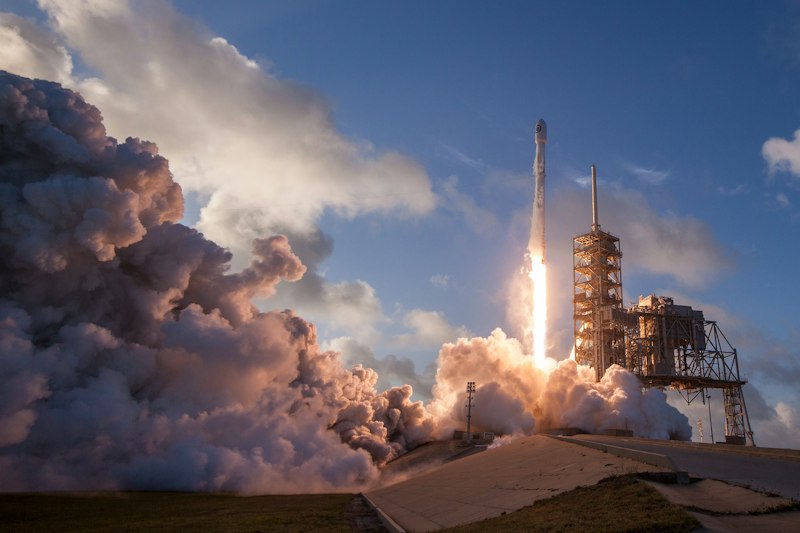
On December 16, 2025, a United Launch Alliance Atlas V lifted off from Cape Canaveral carrying 27 “Amazon Leo” spacecraft — the latest batch for Amazon’s planned LEO satellite-internet constellation (described in some coverage as formerly known as Project Kuiper). The satellites were deployed on schedule beginning about 20 minutes after liftoff. Publicly stated plans for the constellation describe a build-out to roughly 3,200 satellites over more than 80 launches by multiple providers.
The Systems Engineering
Constellation deployment is a manufacturing-and-orbits problem disguised as a launch problem. The rocket is the visible front end, but the systems challenges pile up behind it: satellite production yield, acceptance testing throughput, dispenser integration, and then on-orbit commissioning at scale. The “27 satellites per mission” pattern also forces disciplined interface control: standardized mechanical, electrical, and separation interfaces so the integration process doesn’t become the schedule limiter.
On orbit, the deployment sequence is only step one. A typical constellation stack moves from an initial injection orbit into its operational regime via a combination of propulsion, differential drag, and careful phasing. That means every launch is followed by weeks to months of orbit-raising, plane insertion, and RAAN management — plus continuous conjunction assessment. For broadband networks, there is an additional cross-system dependency: the network does not “exist” until the space segment, gateway sites, user terminals, and network operations all converge into a coherent link budget and routing architecture.
Using a proven launcher like Atlas V also highlights a classic mission assurance strategy: when a constellation needs predictable delivery at high cadence, reliability and schedule confidence can dominate over raw cost per kilogram. In other words, the “right” launch vehicle selection is frequently driven by program-level risk posture and manifest stability, not just performance curves.
SpaceX Hits 100 Falcon 9 Florida Flights for 2025
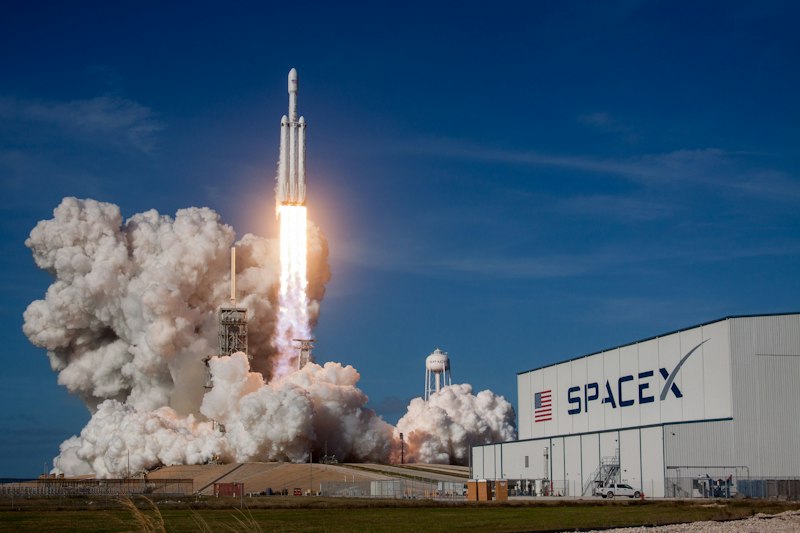
On December 15, 2025 at 12:25 a.m. EST, SpaceX launched 29 Starlink satellites (Group 6-82) from Space Launch Complex 40 at Cape Canaveral Space Force Station. SpaceX described the mission as its 100th Falcon 9 flight from Florida in 2025. The booster (B1092) completed its ninth flight and landed downrange on the droneship A Shortfall of Gravitas. The upper stage deployed the satellites after about an hour, following a coast phase and a second Merlin engine firing.
The Systems Engineering
High-cadence launch is an operations-and-maintenance discipline, not a one-off stunt. At 100 Florida missions in a year, the limiting factors shift from “can the rocket fly?” to “can the enterprise sustain the tempo?” That includes pad turnaround processes, transporter-erector servicing, propellant loading procedures, range coordination, weather rules, and the recurring logistics of drone ship positioning and recovery operations.
From a flight dynamics standpoint, the Starlink mission profile is a good illustration of routine complexity: passing through Max Q, staging, boostback/entry/landing guidance for the first stage, and then a second-stage coast and relight sequence to shape the final deployment orbit. Each one of those phases has distinct failure modes and distinct sensing/control requirements — and sustaining cadence depends on making those phases not only reliable, but also predictable in how they drive refurbishment scope and inspection cycles.
The booster landing is also a systems integration event: GN&C, thermal protection, propulsion restart margins, and deck operations all have to close. The end state is not merely “it landed,” but “it landed in a condition that supports economical reflight,” which is fundamentally a life-cycle engineering requirement.
Rocket Lab’s December: JAXA Dedicated Launch, DiskSats to Orbit, and Neutron Reusability Progress
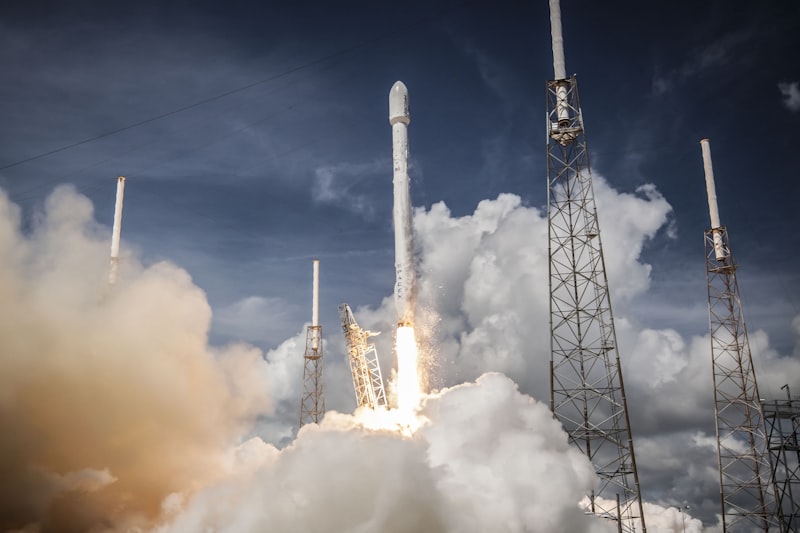
Rocket Lab executed multiple notable milestones in December. On December 14, 2025 at 03:09 UTC, an Electron launched the “RAISE And Shine” mission from Rocket Lab Launch Complex 1 in New Zealand, deploying JAXA’s RAISE-4 technology demonstration spacecraft and marking Rocket Lab’s first dedicated mission for JAXA. Four days later, on December 18, an Electron launched the STP-S30 mission (“Don’t Be Such A Square”) from Launch Complex 2 at Wallops Island, Virginia, deploying four disk-shaped “DiskSat” spacecraft into a circular ~550 km orbit. Separately, Rocket Lab also reported completion of final qualification testing on Neutron’s “Hungry Hippo” fairing, a key element of its partially reusable Neutron architecture.
The Systems Engineering
Rocket Lab’s month is a compact case study in “responsive space” across multiple layers: (1) geographically distributed launch pads and operations teams, (2) customer diversity spanning national agencies and defense technology demonstration, and (3) parallel development of next-generation reusable hardware.
DiskSats are an especially interesting engineering problem because geometry becomes mission design. A disk-like bus (about 1 meter in diameter, only centimeters thick) changes packaging, deployer design, and — critically — the aerodynamic and disturbance environment once you start talking about Very Low Earth Orbit (VLEO) demonstrations. VLEO operations amplify atmospheric drag, atomic oxygen exposure, and aerodynamic torques; they can also alter thermal equilibria due to increased convective and particulate interactions (still small, but not negligible in design margins). A “flat” form factor increases area-to-mass sensitivity, so the attitude control, propulsion (if present), and drag-compensation strategy become first-order drivers of mission success.
For the JAXA RAISE-4 mission, the key engineering value is precision service: a dedicated small launcher is effectively selling injection accuracy, schedule control, and mission-specific orbital targeting. That’s as much about integration flow and launch readiness validation as it is about stage performance. Rocket Lab’s public statement that a second dedicated JAXA mission is planned in early 2026 also underscores a market reality: small launch is increasingly judged on repeatability and operational cadence rather than on a single demonstration flight.
Finally, Neutron’s “Hungry Hippo” fairing concept (a clamshell that opens to release the payload and then closes for return) is a reusability-driven architectural bet. Qualification testing that pushes beyond design loads is about buying margin against aeroelastic and actuation uncertainties — and about proving that the mechanism-and-structure coupling remains stable across repeated cycles. If Neutron executes as designed, the fairing stops being disposable “overhead” and becomes a recoverable element of the first-stage system, with all the design-for-maintainability implications that come with that.
Roman Space Telescope Fully Assembled, Enters Final Test Campaign

NASA announced in early December that the Nancy Grace Roman Space Telescope is now fully assembled following the integration of its two major segments on November 25, 2025 at Goddard Space Flight Center. NASA states the mission remains slated to launch by May 2027, with the team tracking toward a potential earlier launch as soon as fall 2026. After a final test campaign, the observatory is expected to move to Kennedy Space Center for launch preparations.
The Systems Engineering
“Fully assembled” is not the finish line for a flagship observatory — it’s the transition point from integration to verification. Roman’s next phase is a textbook example of a high-consequence system entering environmental qualification: vibration and acoustic loads to simulate launch, thermal-vacuum testing to validate performance in a space-like environment, and extensive functional testing to ensure that the integrated observatory behaves as a coherent system rather than a set of validated subsystems.
Optical systems engineering is the quiet hero here. Flagship telescopes succeed or fail on the control of contamination, alignment stability, and calibration repeatability. Even if a telescope’s mirror is “Hubble-class” in aperture, the mission value is created in the downstream chain: wavefront stability, pointing jitter control (think line-of-sight stability), detector characterization, and an end-to-end data pipeline that preserves photometric and astrometric fidelity.
Roman’s broader engineering significance is also architectural: it is designed for wide-field surveys at scale, meaning the mission is effectively a throughput machine. Survey efficiency couples spacecraft operations, observing strategy, downlink, processing, and archive infrastructure into one system. When Roman begins operations, its scientific productivity will be as dependent on ground segment capacity and calibration discipline as it is on optics.
Webb Sees a Thick Atmosphere on a “Lava World” Rocky Exoplanet

On December 11, 2025, NASA and the Space Telescope Science Institute reported that James Webb Space Telescope observations of TOI-561 b — an ultra-hot, rocky “super-Earth” — provide the strongest evidence yet for a thick atmosphere on a rocky planet outside our solar system. The analysis used Webb’s NIRSpec near-infrared observations, including an emission spectrum captured in May 2024, with comparisons to models suggesting the planet is surrounded by a volatile-rich atmosphere above a global magma ocean.
The Systems Engineering
This result is an excellent reminder that modern astronomy is “remote sensing with hard constraints.” For a rocky exoplanet, the signal you want (atmospheric spectral features) is often buried under the signal you must remove (stellar light, instrument systematics, and the planet’s own thermal emission variability across its orbit).
The methodological backbone is spectroscopy and careful differencing. In emission/secondary-eclipse style analyses, engineers and scientists are effectively doing system identification: measure how the system’s output spectrum changes when the planet is occulted by the star, then infer the planet’s contribution. The interpretation then depends on radiative transfer modeling and assumptions about composition, temperature structure, and surface-atmosphere coupling. For an ultra-hot planet, the physics can be counterintuitive: a substantial atmosphere can redistribute heat via winds, changing the dayside brightness temperature; at the same time, high irradiation drives atmospheric escape processes that compete with any replenishment from a molten surface.
From a systems perspective, Webb’s value here is not just sensitivity; it is stability and calibration. To support robust retrievals, the observatory has to deliver repeatable spectra across long time series while maintaining well-characterized instrument behavior. In other words: this discovery is as much about metrology and calibration discipline as it is about astrophysical interpretation.
Webb Links GRB 250314A to the Earliest Supernova Yet Observed

On December 9, 2025, NASA and ESA reported that Webb identified the source of a bright gamma-ray burst (GRB 250314A) as a supernova that exploded when the universe was only about 730 million years old, and that Webb’s near-infrared observations also detected the supernova’s host galaxy. ESA notes that this observation broke Webb’s previous “most distant supernova” record, which corresponded to a supernova when the universe was about 1.8 billion years old.
The Systems Engineering
Time-domain astronomy is a scheduling and coordination challenge that looks a lot like rapid-response operations. A GRB is detected, localizations are refined, and the world’s observatories pivot into follow-up mode with tight deadlines. Webb’s role is enabled by its Target of Opportunity capability — the operational machinery that allows a high-value transient to interrupt the baseline observing plan, acquire the target, and return calibrated data quickly enough to matter.
The “earliest supernova” claim is not simply a headline — it is a measurement problem. In the early universe, the emitted ultraviolet/visible light is shifted into the near-infrared by cosmic expansion, which is precisely where Webb’s imaging and spectroscopy excel. Detecting the host galaxy and characterizing the transient requires careful separation of faint signals and robust calibration, especially when the target sits at extreme redshift. The engineering here is end-to-end: detector performance, pointing, stability, data processing, and the statistical rigor of photometric/spectroscopic inference.
Roman’s mention in some scientific commentary is also worth noting in an engineering sense: future wide-field surveys will likely serve as “discovery engines” that feed follow-up assets like Webb. That implies a pipeline future where machine learning triage, rapid orbit/sky localization, and automated observation planning become integral components of the astrophysics system.
Interstellar Comet 3I/ATLAS Makes Its Close Approach
Interstellar Comet 3I/ATLAS made its widely watched close approach in mid-to-late December, and NASA highlighted observations that include imagery from Parker Solar Probe. The object is only the third known interstellar visitor identified passing through our solar system, following 1I/ʻOumuamua and 2I/Borisov.
The Systems Engineering
Interstellar objects are a practical test of the modern discovery-to-characterization pipeline. The engineering challenge begins with detection: survey systems generate candidate tracklets, then orbit determination teams rapidly fit trajectories and propagate ephemerides with uncertainty bounds. When the orbit is hyperbolic, the sensitivity to early astrometric error can be unforgiving — so the workflow becomes an iterative loop of “observe → refine → propagate → task additional assets.”
Once you have an ephemeris, tasking is its own system problem: coordinating ground-based telescopes, scheduling windows, and leveraging space-based platforms that have unique viewing geometries (such as Parker Solar Probe’s vantage point). Each additional observing asset contributes different error sources and different signal qualities, so the fused result depends on careful cross-calibration and well-managed metadata.
Finally, there’s the interpretation layer: for an interstellar comet, you want constraints on composition, activity, and non-gravitational accelerations. That requires enough cadence and spectral coverage to separate nucleus behavior from coma dynamics — and to understand whether outgassing materially perturbs the trajectory. The overarching takeaway is that “rapid science” in 2025 is fundamentally a systems engineering product: sensors, data processing, communications, and scheduling working as one.
What’s on the January 2026 Watchlist
Public launch manifests for January 2026 are (as always) fluid, with NET dates moving as vehicles, payloads, and ranges mature readiness. Based on currently published schedules, a few notable items to track include:
- SpaceX Falcon 9 — the “Twilight (Pandora & Others)” rideshare mission is listed as NET January 5, 2026 from Vandenberg.
- Isar Aerospace Spectrum — a “Flight Two” is listed as NET January 13, 2026 from Andøya, Norway.
- Ariane 6 — an Ariane 6 mission carrying “Intelsat 45” is listed for mid-January (currently shown as January 16) from the Guiana Space Centre.
- High-cadence LEO deployments — multiple schedules also show additional early-January Falcon 9 missions for constellation replenishment and rideshares, with exact dates shifting as the month approaches.
As always, treat these as planning signals rather than fixed commitments: the most reliable indicator is when a provider and range converge on a firm window and begin standardized launch readiness updates.


