Image source · View full image · Original image
SpaceX's Starship reached orbit and deployed 26 Starlink V3 satellites on September 28, according to Ars Technica and Space.com, before returning earlier than planned [2] [3]. Spectrum reached orbit from Norway on September 5 and met the European Launcher Challenge's first milestone [7] [8]. NASA activated Roman's main camera and tested its guidance and downlink systems [18] [19] [20]. LINK's attempt to extend Swift's life ended without raising the observatory's orbit; the servicer reentered on September 25 [15] [16].
Starship's first orbital test
Space.com reported that Starship Flight 14 reached orbit from Starbase on September 28 and deployed 26 Starlink V3 satellites. Its account says controllers shortened the planned flight and brought the upper stage down in the northern Pacific [3].
Spaceflight Now reported that SpaceX flew its 700th Falcon rocket on September 13, launching the final three O3b mPOWER satellites for SES [5]. Space.com counted three classified Space Force launches in 16 days (September 10, 16, and 26) and 108 Falcon 9 flights in 2026 by September 26 [6].
Spectrum reached orbit; Ariane 6 faced delays
Spectrum lifted off from Andøya Spaceport at 22:12 CEST (20:12 UTC) on September 5. It reached orbit and deployed its payloads after a circularization burn [7] [8] [9]. Its first flight, in March 2025, ended after about 30 seconds [7] [9]. The rocket is 28 meters tall and is designed to carry up to 1,000 kilograms to low Earth orbit [7].
ESA says Isar is the first company to meet the European Launcher Challenge's first milestone, an orbital launch no later than 2027 [7]. That moves one contract condition from plan to demonstrated. It does not yet establish a launch cadence.
Vega-C flight VV30 lifted off from Kourou at 22:21 local time on September 14 (01:21 UTC September 15). It carried the Copernicus Sentinel-3C satellite and ESA's FLEX Earth Explorer [10] [11]. Sentinel-3C rode on top of a Vespa adapter and separated first, and FLEX followed about an hour later. The last separation came 116 minutes after liftoff, into a sun-synchronous orbit at about 810 kilometers [10] [11]. ESA's launch report described the satellites entering early checkout [10].
FLEX's Fluorescence Imaging Spectrometer is built to detect the faint light that plants emit during photosynthesis, a direct indicator of plant activity [10]. Because that signal is weak, FLEX will fly in tandem first with Sentinel-3A and later with Sentinel-3C. Their near-simultaneous measurements of clouds, aerosols, and land surface will help interpret FLEX data [10].
European Spaceflight reported on September 21 that Ariane 6's launch schedule faced delays. It quoted an ESA spokesperson acknowledging the delays and a statement from ArianeGroup and Arianespace saying the 2026 mission schedule would need adjustment while additional production-line checks were carried out [12].
The timing matters to customers. Via Satellite reported that Amazon raised its Ariane 64 order from 18 to 24 launches on September 9. Arianespace has flown three Ariane 6 missions for Amazon Leo this year, deploying 100 satellites, while Vulcan and New Glenn were both out of service [13]. Blue Origin CEO Dave Limp said on September 28 that the company sees "a path to launch this year" after the May 28 New Glenn explosion, which Florida Today attributes to a BE-4 oxygen valve anomaly [14].
The Swift boost ended; automated science pointing resumed in September
NASA formally ended its involvement in LINK on September 3. The spacecraft reentered on September 25 after 85 days in orbit [15] [16].
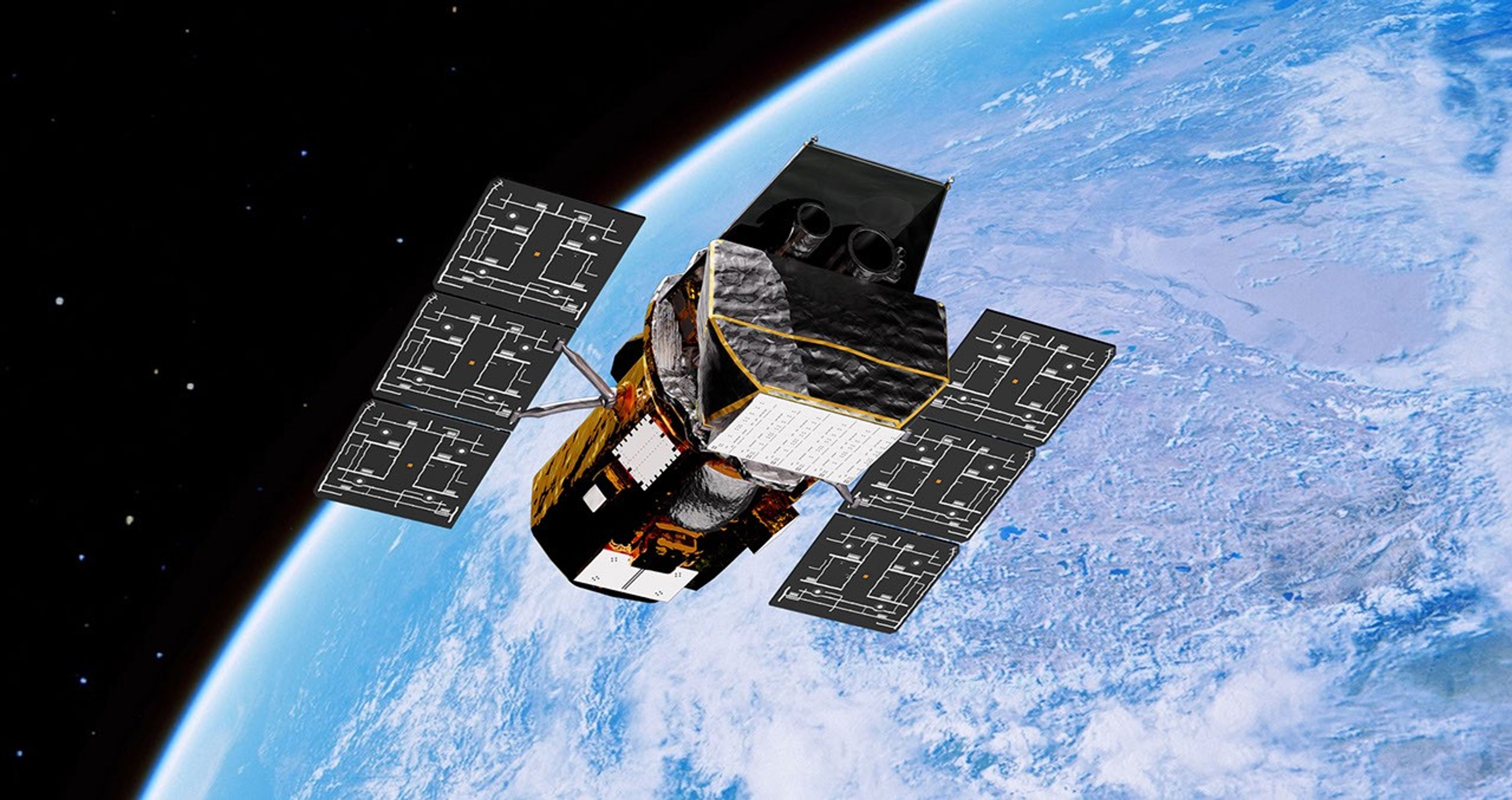
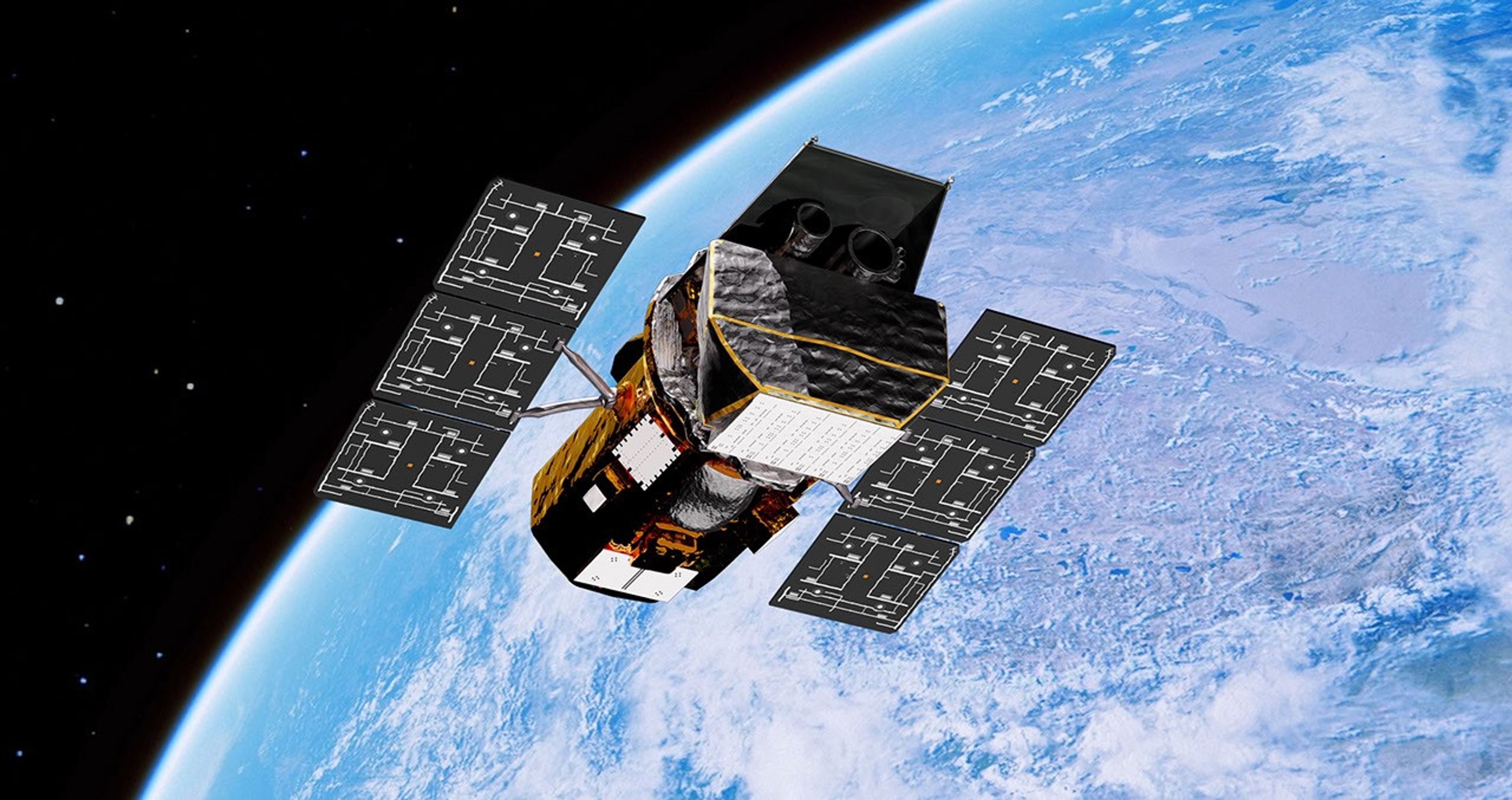
Katalyst says an anomaly sent LINK into a multi-axis spin. During that period, an electrical power system fault left two of its three reaction wheels unavailable. Engineers slowed the spin from 9 to 1.47 degrees per second with the Hall-effect thrusters. They then uploaded guidance software that combined the one working wheel with thrusters [15]. Holding attitude with thrusters used propellant quickly, and there was not enough left for a capture and boost [15]. LINK came within 12 to 15 kilometers of Swift and tested its robotic arms [15] [16].
Katalyst says it designed, built, tested and launched LINK in nine months as part of a $30 million mission [15].
Swift's Burst Alert Telescope was confirmed detecting gamma rays on September 18, and automatic slewing resumed September 21 [17]. Science operations increase drag. As of September 25, Swift was at about 325 kilometers. NASA's September 25 update expected it to fall below 300 kilometers, where science would likely end, in early to mid-October [17]. NASA's September lessons report projected reentry by year's end without intervention [16].
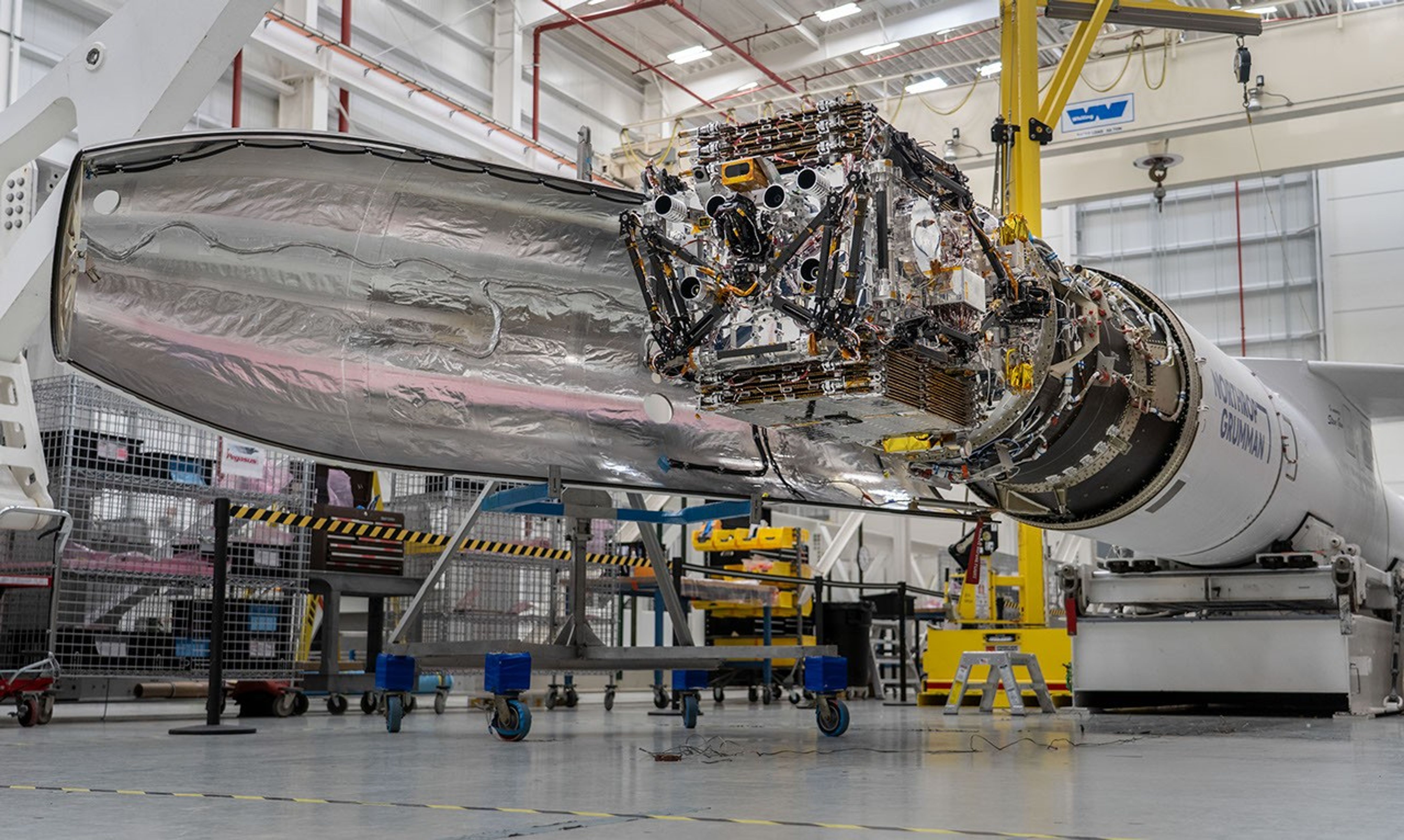
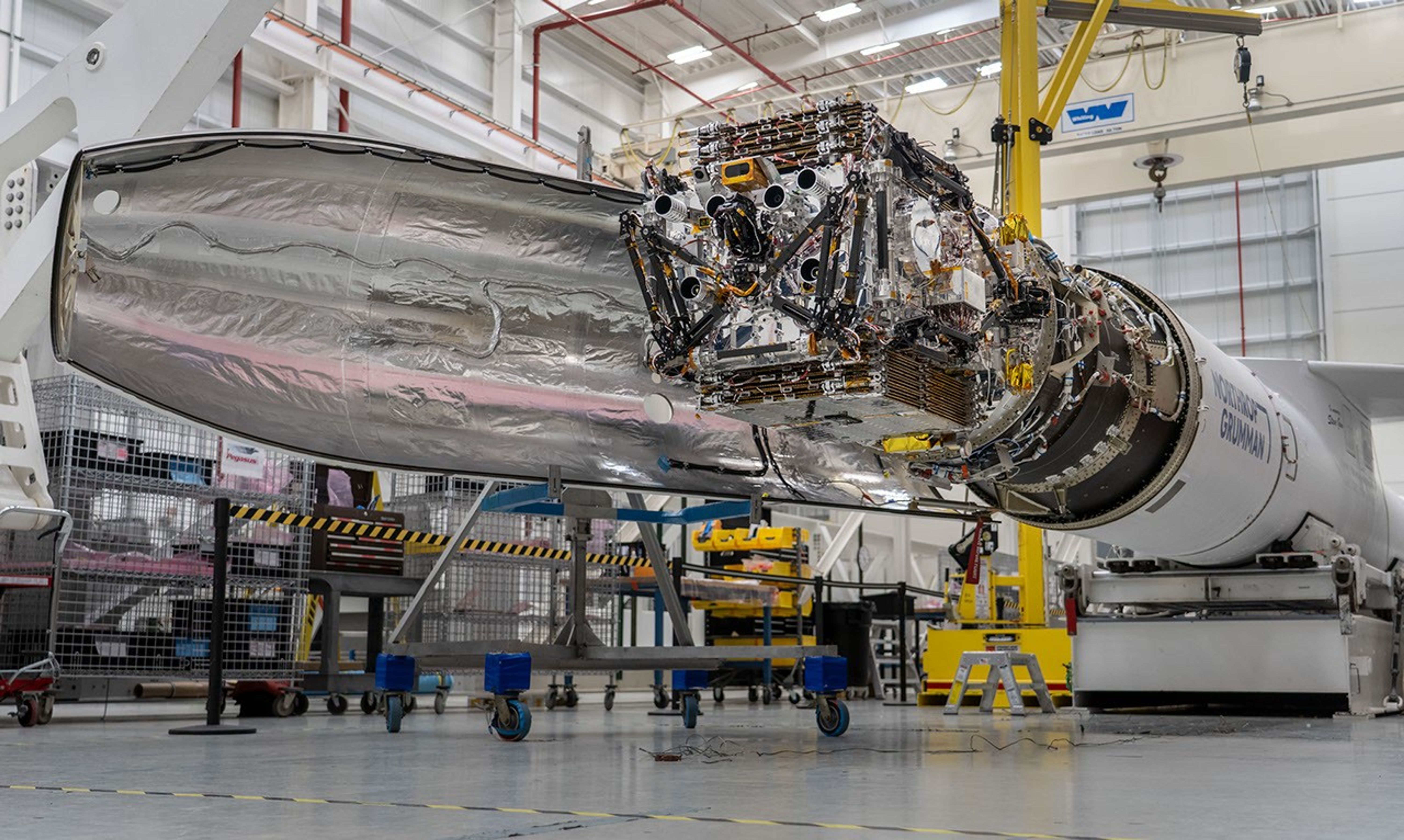
NASA's lessons-learned article stresses scheduling: milestones and approvals built around the date Swift would pass the point of no return. It also credits drag-minimizing pointing, used since December 2025, with buying months of time [16]. Katalyst says the experience will feed its NEXUS platform and four follow-on missions [15].

Roman's commissioning passed early checkout steps
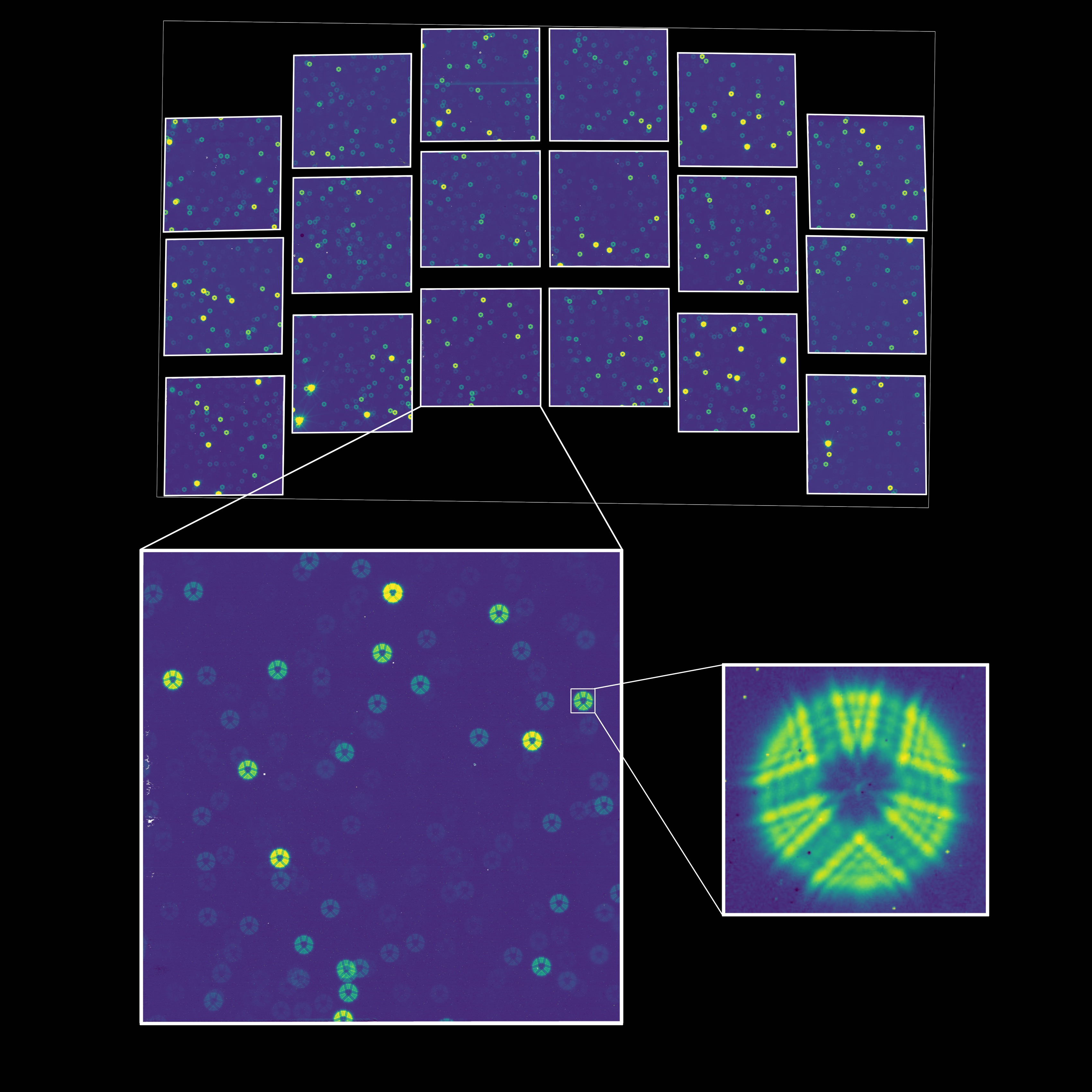
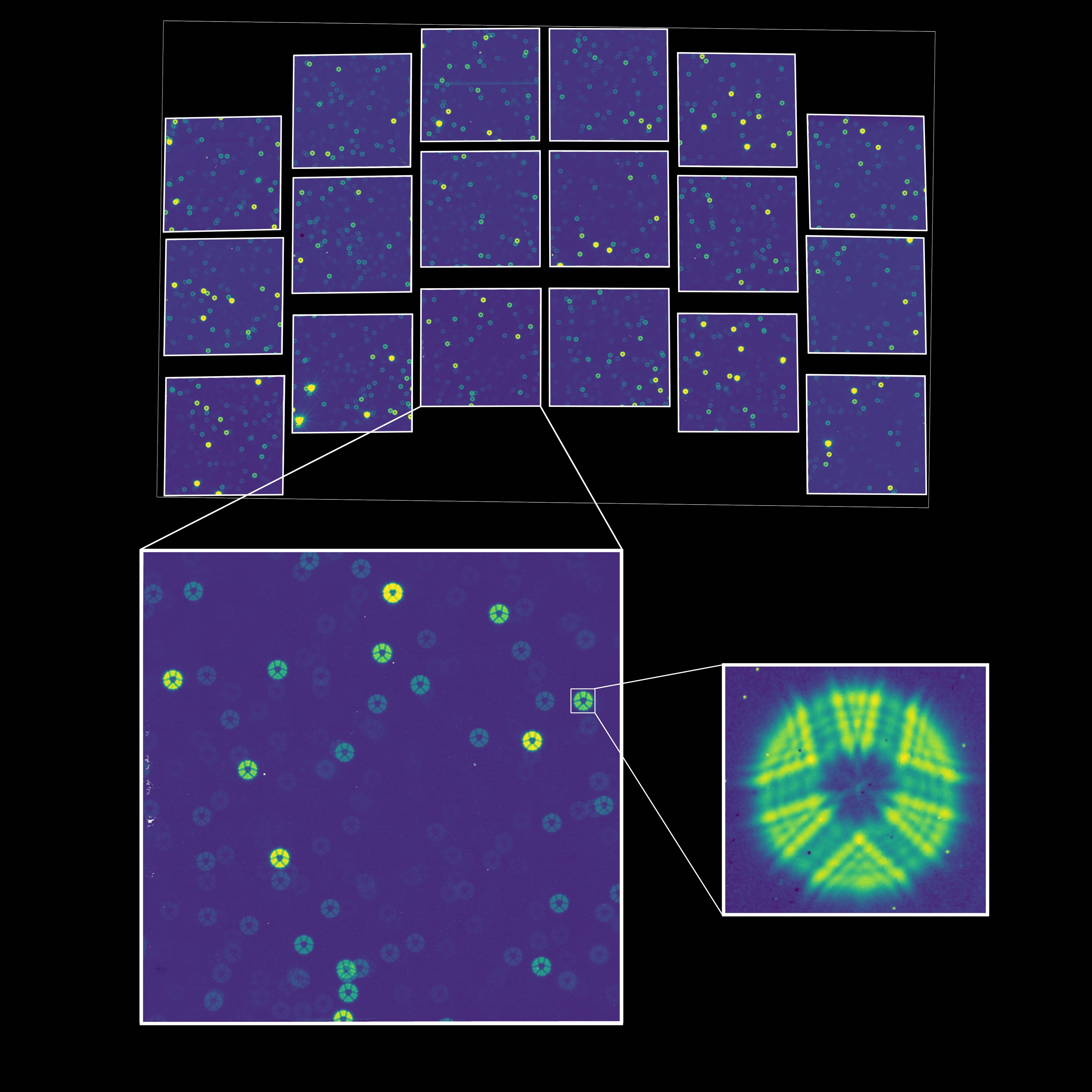
NASA's September reports describe Roman's commissioning tests [18] [19] [20]. Before activation, the Wide Field Instrument's detectors were held at minus 65 degrees Celsius for 10 days to drive off contaminants. On September 11 the team let the instrument cool to minus 143 degrees and powered on its 18 infrared detectors. They then tested the calibration system, the element wheel, which carries filters and other optics, and the focus mechanism, while the detectors cooled toward about minus 183 degrees [18].
The first test image shows stars as out-of-focus donuts, as expected with the detector array still in its launch position. It is a starting point for alignment, not a science image. NASA says first science images remain on track for early 2027 [18].

Roman will return about 1.4 terabytes of data a day, and the stations that will receive it passed downlink tests in September. JAXA's Misasa station received data at the maximum 500 megabits per second on September 7, during a typhoon. White Sands followed on September 8-11, and ESA's New Norcia station on September 17 [19].
From September 15 to 21, fine-guidance tests showed pointing stability better than 1/100,000 of a degree for 30 minutes in Wide Field Instrument mode and for eight hours in coronagraph mode [20]. The Coronagraph Instrument, powered on September 1, recorded first light on September 22. On September 27 it imaged a crowded field in the Large Magellanic Cloud [20]. The coronagraph produced a focused image during these early tests. Further tuning and validation of Roman's spectral-guiding mode remained ahead [20].
Station logistics: Progress resupplies the crew
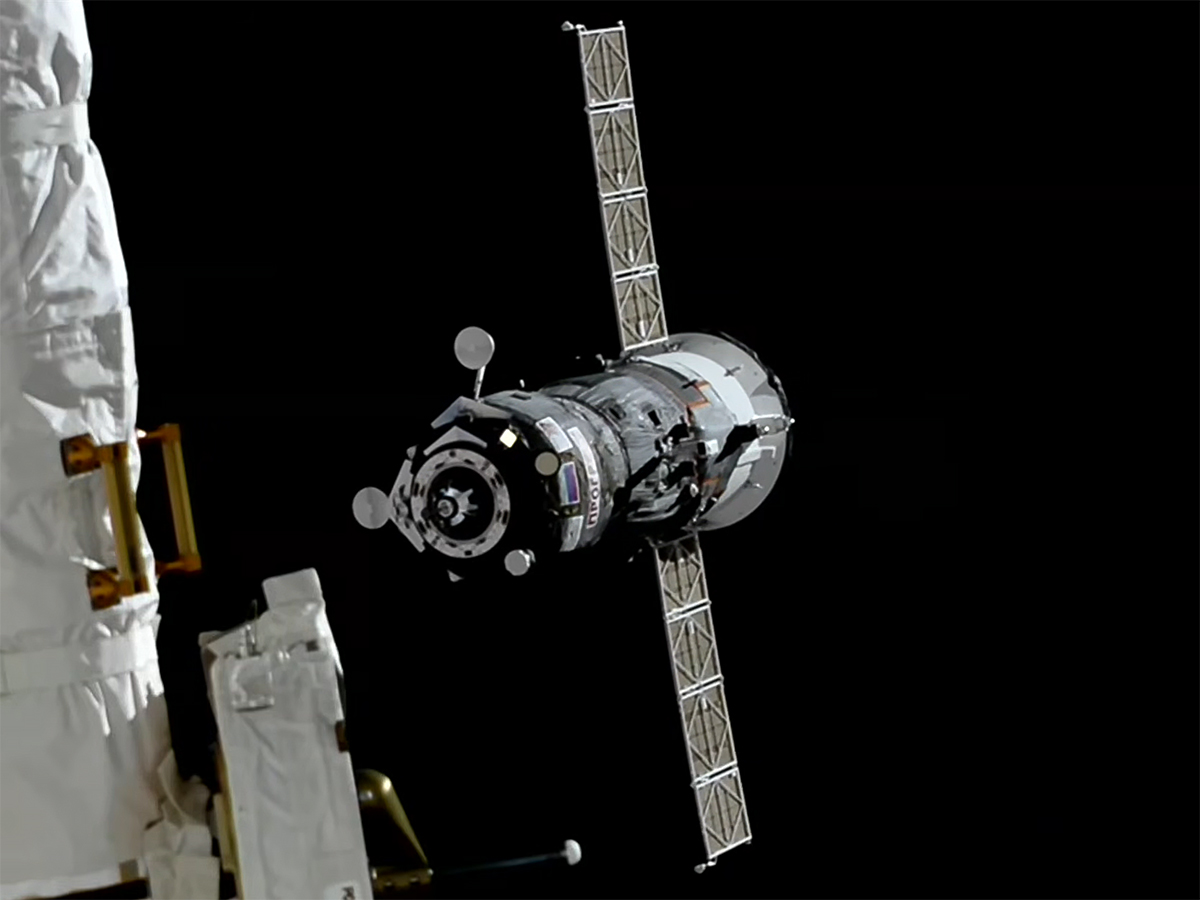
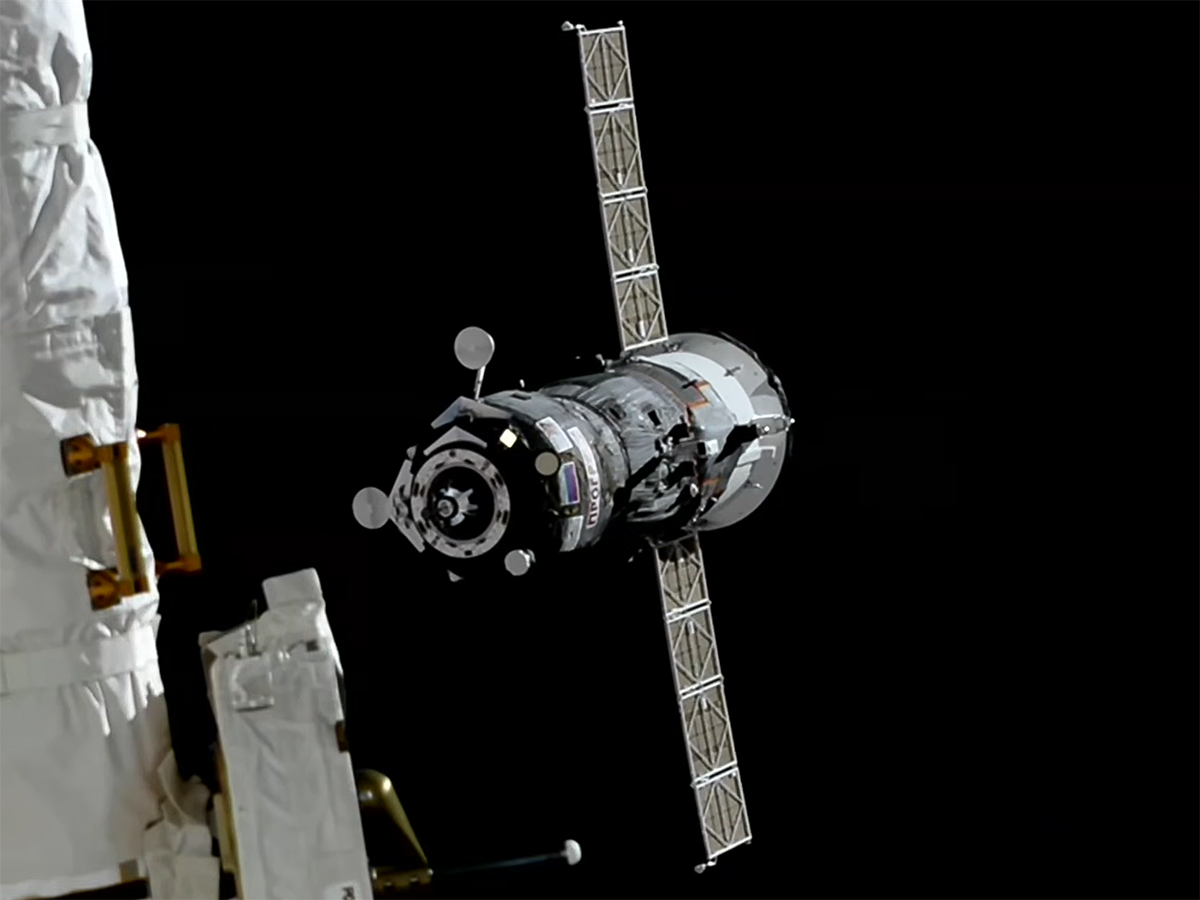
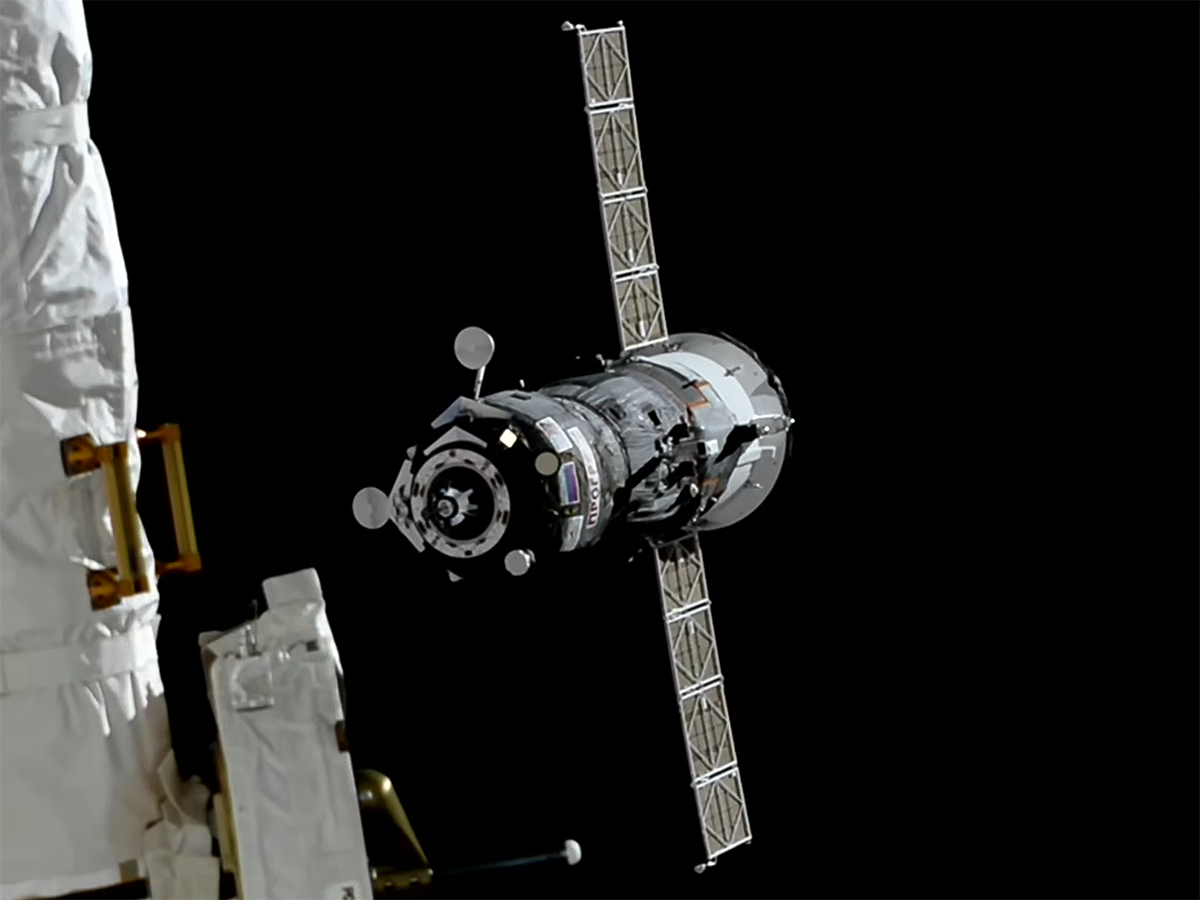
Progress 96 launched from Baikonur on September 16 and docked to the space-facing port of the station's Poisk module at 9:44 a.m. EDT on September 19, NASA reported [21].
NASA reported that the spacecraft carried about three tons of food, fuel and supplies [21].
Crew-13 launched and docked on October 1 [41] [47]. In a September 18 update, NASA described a $946 million contract modification for Crew-15, Crew-16 and Crew-17, bringing SpaceX's contracted total to 17 missions. It listed readiness dates in 2027 and 2028 [25].
China's pace and India's geosynchronous imager
SpaceNews counted ten Chinese launches in September. They include four rockets launched from three sites within 48 hours on September 15-16, a Long March 8A carrying Guowang broadband satellites on September 23, and a Long March 6A carrying Yaogan-40 satellites on September 24 [26]. SpaceNews put China's 2026 total at 70 launch attempts, leaving at least 31 in the fourth quarter to pass 100 in a year for the first time [26]. Galactic Energy's Pallas-1 reached orbit on its first flight on September 1, according to Xinhua [27].
ISRO's GSLV-F17 launched the 2,367-kilogram EOS-05 at 2:55 a.m. India time on September 4. That was 21:25 UTC, or the evening of September 3 in U.S. time zones. The rocket placed the satellite in its planned sub-geosynchronous transfer orbit [28] [29] [30]. ISRO calls EOS-05 India's first imaging satellite in geosynchronous orbit [28]. ISRO reported successful transfer-orbit insertion, without announcing final-orbit arrival or the start of service [28].
Policy and capital
Four September signings brought the Artemis Accords to 76 participants: Albania on September 21, Croatia on September 23, Côte d'Ivoire on September 24 and San Marino on September 25 [31] [32] [33] [48] [49].
Four company announcements described September financing. On September 8, Stoke Space announced an initial closing of its $1 billion Series E round [50]. Open Cosmos announced €300 million in funding on September 14 [51]. On September 16, Impulse Space announced a $308 million extension that brought its Series D total to $808 million [52]. Varda announced a $251 million Series D round on September 30 [53].
Planetary science and astronomy
In an October 6 update, ESA said BepiColombo's Mercury Transfer Module had separated on September 3, leaving its Mercury Planetary Orbiter to steer the spacecraft stack [38]. On September 24 its thrusters fired for 8 minutes 42 seconds, an 11.4 meters per second trajectory correction. The orbiter's instruments were switched on together on September 15, and ESA's first analyses show them in good health [38]. Mercury orbit insertion is targeted for November 21 and science operations for April 2027 [38].
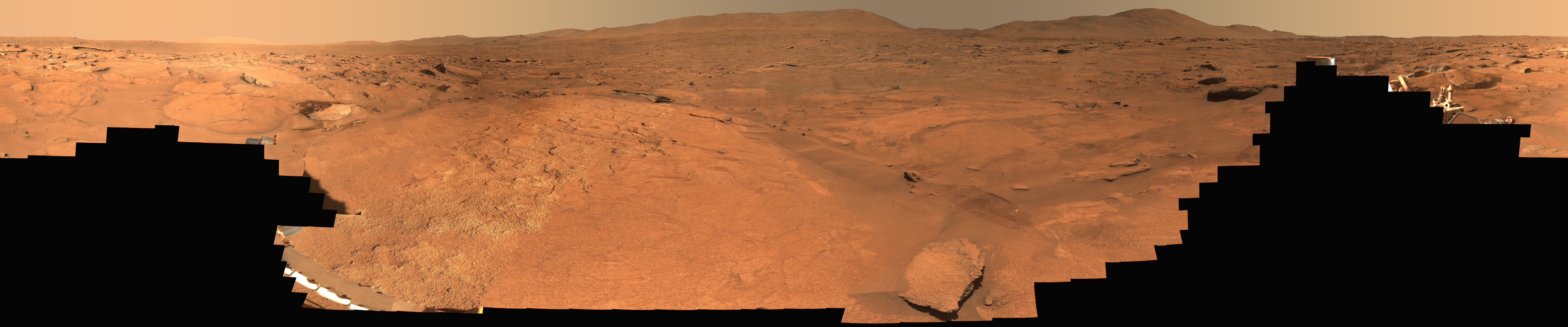
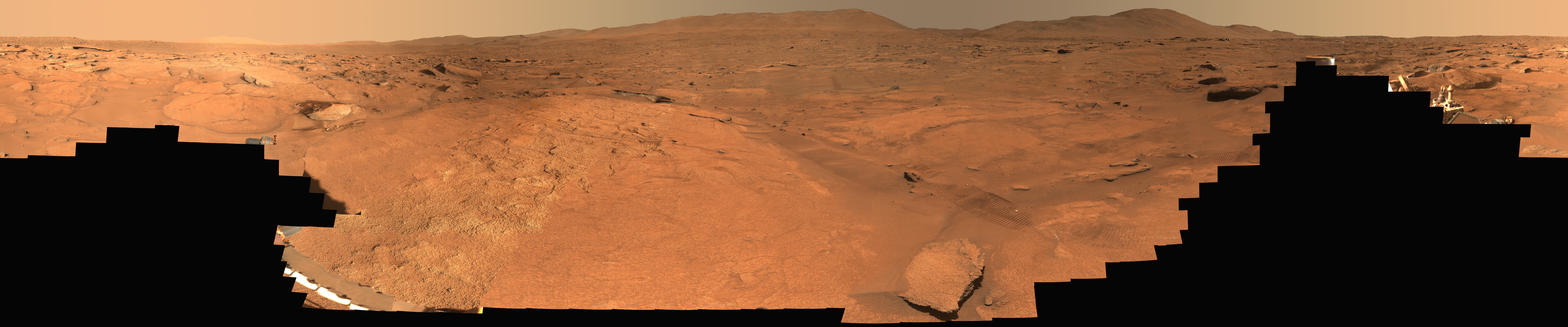
A September 21 Perseverance study found that rock in Jezero Crater's "Margin Unit" is igneous. It was altered by water at least three times: carbon-dioxide-rich groundwater, possible lake water, and later hot fluids that left fluorite [39]. Orbital data had suggested carbonates formed in the crater's lake. The order of the episodes is established, but their ages are not [39].

NASA's September 15 report describes Webb observations of brown dwarfs in IC 348 with as little as about twice Jupiter's mass, less than star-formation models predict [40]. The observations date from 2024 and 2025.
Looking ahead: October 2026
The October outlook, as of October 8 UTC:
- Crew-13 launched on October 1 and docked at Harmony's forward port at 7:05 p.m. EDT, 7 hours 55 minutes after liftoff [41] [47].
- Organizers scheduled IAC 2026 for October 5-9 in Antalya [54].
Upcoming targets remain subject to change:
- October 8: Crew-12 return, scheduled in NASA's October 7 advisory [44].
- October 13: CRS-35 cargo launch target at 6:33 a.m. EDT, carrying the final Roll-Out Solar Arrays, per NASA's October 7 advisory [44].
- Early to mid-October: NASA's September 25 update forecast that Swift would fall below the altitude where science would likely end [17] [56].
- JAXA lists an MMX launch target of October 20 at 04:41:03 JST [55]. That is October 19 at 19:41:03 UTC. Its August 20 notice gives October 21-November 7 as the reserved launch period [45].
- Other work ahead includes Roman tuning and spectral-guiding validation [20], BepiColombo trajectory corrections [38], Ariane 6's schedule adjustment reported by European Spaceflight [12], Blue Origin's targeted return to flight [14], and China's fourth-quarter launch push, including Shenzhou-24, which SpaceNews expects around November [26].
Sources
- SpaceX, "Starship Flight 14" (mission page), September 28, 2026. https://www.spacex.com/launches/starship-flight-14/
- Ars Technica (Stephen Clark), "SpaceX's Starship goes orbital, deploying first next-gen Starlinks," September 28, 2026. https://arstechnica.com/space/2026/09/starships-first-orbital-launch-gives-lift-to-spacexs-next-gen-starlinks/
- Space.com (Mike Wall), "SpaceX launches Starship into orbit for 1st time — largest rocket ever built notches key milestone on dramatic Flight 14 test," September 28, 2026. https://www.space.com/space-exploration/launches-spacecraft/spacex-starship-megarocket-flight-14-orbital-launch-success
- Aviation Week (Irene Klotz), "FAA Clears SpaceX For Starship 14 Flight," September 27, 2026. https://aviationweek.com/space/launch-vehicles-propulsion/faa-clears-spacex-starship-14-flight
- Spaceflight Now (Will Robinson-Smith), "SpaceX launches 700th Falcon rocket, carries final 3 O3b mPOWER satellites to orbit for SES," September 13, 2026. https://spaceflightnow.com/2026/09/13/live-coverage-spacex-to-launch-final-3-o3b-mpower-satellites-for-ses/
- Space.com (Mike Wall), "SpaceX launches classified mystery mission for US Space Force from California," September 26, 2026. https://www.space.com/space-exploration/launches-spacecraft/spacex-launches-classified-mystery-mission-for-us-space-force-from-california
- ESA, "Isar Aerospace achieves first launch to orbit from continental Europe," September 5, 2026. https://www.esa.int/Enabling_Support/Space_Transportation/Boost/Isar_Aerospace_achieves_first_launch_to_orbit_from_continental_Europe
- German Aerospace Center (DLR), "First orbital flight of the SPECTRUM commercial launch vehicle from Germany," September 2026. https://www.dlr.de/en/latest/news/2026/first-orbital-flight-of-the-spectrum-commercial-launch-vehicle-from-germany
- Space.com (Mike Wall), "Private German rocket makes history, reaches orbit from European soil," September 5, 2026. https://www.space.com/space-exploration/launches-spacecraft/isar-aerospace-second-launch-norway-andoya-spaceport-spectrum-rocket
- ESA, "FLEX and Sentinel-3C launched," September 15, 2026. https://www.esa.int/Applications/Observing_the_Earth/FLEX_and_Sentinel-3C_launched
- Avio, "Avio successfully launches Sentinel-3C and FLEX satellites with Vega C," September 15, 2026. https://www.avio.com/press-release/avio-successfully-launches-sentinel-3-c-and-flex-satellites-with-vega-c-
- European Spaceflight (Andrew Parsonson), "ESA Acknowledges Ariane 6 Delays Following Reports of Turbopump Issue," September 21, 2026. https://europeanspaceflight.com/esa-acknowledges-ariane-6-delays-following-reports-of-turbopump-issue/
- Via Satellite (Rachel Jewett), "Amazon Leo Orders 6 More Ariane 64 Launches from Arianespace," September 9, 2026. https://www.satellitetoday.com/launch/2026/09/09/amazon-leo-orders-6-more-ariane-64-launches-from-arianespace/
- Florida Today via Naples Daily News (Rick Neale), "Blue Origin CEO: 'We have a path to launch this year' amid pad rebuilding effort," updated September 28, 2026. https://www.naplesnews.com/story/tech/science/space/2026/09/28/blue-origin-ceo-dave-limp-sees-path-to-return-to-launch-in-2026-after-new-glenn-rocket-explosion/91985125007/
- Katalyst Space, "Katalyst Concludes LINK Mission, Advances Future Robotic Space Operations," September 25, 2026. https://www.katalystspace.com/news/katalyst-concludes-link-mission-advances-future-robotic-space-operations
- NASA Science, "NASA Highlights Lessons Learned From Swift Boost Mission," September 28, 2026 (updated September 29, 2026). https://science.nasa.gov/missions/swift/nasa-highlights-lessons-learned-from-swift-boost-mission/
- NASA Science, "NASA's Swift Powers On Third Instrument, Restarts Automated Slewing," September 25, 2026. https://science.nasa.gov/blogs/swift/2026/09/25/nasas-swift-powers-on-third-instrument-restarts-automated-slewing/
- NASA Science, "NASA Activates Roman's Primary Instrument, Checks Out Coronagraph," September 15, 2026. https://science.nasa.gov/blogs/roman/2026/09/15/nasa-activates-romans-primary-instrument-checks-out-coronagraph/
- NASA Science, "NASA's Roman Team Confirms Ground Stations Receiving Data," September 25, 2026. https://science.nasa.gov/blogs/roman/2026/09/25/nasas-roman-team-confirms-ground-stations-receiving-data/
- NASA Science, "NASA Checks Roman Guidance System, Takes First Coronagraph Observation," September 30, 2026. https://science.nasa.gov/blogs/roman/2026/09/30/nasa-checks-roman-guidance-system-takes-first-coronagraph-observation/
- NASA, "Progress 96 Cargo Spacecraft Docks to Station to Resupply Crew," September 19, 2026. https://www.nasa.gov/blogs/spacestation/2026/09/19/progress-96-cargo-spacecraft-docks-to-station-to-resupply-crew/
- Spaceflight Now (Steven Young), "Russian Progress cargo ship arrives at International Space Station," September 19, 2026. https://spaceflightnow.com/2026/09/19/russian-progress-cargo-ship-arrives-at-international-space-station/
- TASS, "Progress MS-35 cargo spacecraft with equipment for Teledroid placed into orbit," September 16, 2026. https://tass.com/science/2188547
- NASA, "NASA, SpaceX Move to Final Crew-13 Prelaunch Prep for Oct. 1 Liftoff," September 22, 2026. https://www.nasa.gov/blogs/spacestation/2026/09/22/nasa-spacex-move-to-final-crew-13-prelaunch-prep-for-oct-1-liftoff/
- NASA, "NASA Awards SpaceX Three Crew Flights to Space Station," September 18, 2026 (updated). https://www.nasa.gov/missions/station/commercial-crew/nasa-awards-spacex-three-crew-flights-to-space-station/
- SpaceNews (Andrew Jones), "China launches Guowang, Yaogan-40 satellites, sets up busy Q4 manifest," October 1, 2026. https://spacenews.com/china-launches-guowang-yaogan-40-satellites-sets-up-busy-q4-manifest/
- Xinhua, "China's PALLAS-1 rocket completes successful maiden flight," September 1, 2026. https://english.news.cn/20260901/56c30ded52654b1493dedc488796d538/c.html
- ISRO, "GSLV-F17/EOS-05 Mission" (mission page). https://www.isro.gov.in/Mission_GSLVF17.html
- ISRO, "GSLV-F17/EOS-05 Mission – Launch Streaming" (launch time page). https://www.isro.gov.in/GSLV_F17_EOS_05_Mission_Launch_Streaming.html
- The Hindu (Hemanth C.S.), "ISRO successfully launches Earth observation satellite EOS-05," September 4, 2026. https://www.thehindu.com/sci-tech/science/isro-gslv-f17-eos-05-satellite-rocket-launch-september-4-sriharikota-updates/article71425914.ece
- NASA, "NASA Celebrates as Artemis Accords Surpasses 75 Signatories," September 28, 2026. https://www.nasa.gov/news-release/nasa-celebrates-as-artemis-accords-surpasses-75-signatories/
- NASA, "NASA Welcomes Albania as Newest Artemis Accords Signatory," September 21, 2026. https://www.nasa.gov/organizations/oiir/nasa-welcomes-albania-as-newest-artemis-accords-signatory/
- NASA, "NASA Welcomes San Marino Signing the Artemis Accords," September 25, 2026. https://www.nasa.gov/organizations/oiir/nasa-welcomes-san-marino-signing-the-artemis-accords/
- SpaceNews (Jeff Foust), "Stoke Space raises $1 billion and unveils larger launch vehicle," September 8, 2026. https://spacenews.com/stoke-space-raises-1-billion-and-unveils-larger-launch-vehicle/
- SpaceNews (Jason Rainbow), "Open Cosmos reaches unicorn status with $348 million funding round," September 14, 2026. https://spacenews.com/open-cosmos-reaches-unicorn-status-with-348-million-funding-round/
- SpaceNews (Jeff Foust), "Impulse Space raises an additional $308 million," September 16, 2026. https://spacenews.com/impulse-space-raises-an-additional-308-million/
- SpaceNews (Jeff Foust), "Varda Space Industries raises $251 million," September 30, 2026. https://spacenews.com/varda-space-industries-raises-251-million/
- ESA, "Latest updates: BepiColombo's arrival at Mercury," live page updated October 6, 2026. https://www.esa.int/Science_Exploration/Space_Science/BepiColombo/Latest_updates_BepiColombo_s_arrival_at_Mercury
- NASA Jet Propulsion Laboratory, "NASA Discovery Reveals Complex Water Systems on Early Mars," September 21, 2026. https://www.jpl.nasa.gov/news/nasa-discovery-reveals-complex-water-systems-on-early-mars/
- NASA Science, "NASA's Webb Reveals Dynamic Panorama of Star Formation," September 15, 2026. https://science.nasa.gov/missions/webb/nasas-webb-reveals-dynamic-panorama-of-star-formation/
- NASA, "NASA's SpaceX Crew-13 Reaches Orbit, News Conference at 1:10 p.m. EDT," October 1, 2026. https://www.nasa.gov/blogs/spacestation/2026/10/01/nasas-spacex-crew-13-reaches-orbit-news-conference-at-1245-p-m-edt/
- International Astronautical Federation, "77th International Astronautical Congress (IAC 2026)." https://www.iafastro.org/events/iac/international-astronautical-congress-2026/
- Office of Space Commerce (NOAA), "Notice of Mission Authorization Pilot Program," Federal Register, 91 FR 53849, August 20, 2026. https://www.federalregister.gov/documents/2026/08/20/2026-17016/notice-of-mission-authorization-pilot-program
- NASA, "NASA Sets Coverage for SpaceX 35th Station Resupply Launch, Arrival," October 7, 2026. https://www.nasa.gov/news-release/nasa-sets-coverage-for-spacex-35th-station-resupply-launch-arrival/
- JAXA, "Launch schedule of the Martian Moons eXploration (MMX) spacecraft aboard H3 Launch Vehicle flight No.10 (H3 F10)," August 20, 2026. https://global.jaxa.jp/press/2026/08/20260820-1_e.html
- NASA Artemis (@NASAArtemis) on X, post of September 30, 2026 (official agency social account). https://x.com/NASAArtemis/status/2105410089192411229
- NASA, "Dragon Docks Bringing SpaceX Crew-13 to Station," October 1, 2026. https://www.nasa.gov/blogs/spacestation/2026/10/01/dragon-docks-bringing-spacex-crew-13-to-station/
- NASA, "NASA Welcomes Croatia as Newest Artemis Accords Signatory," September 23, 2026. https://www.nasa.gov/organizations/oiir/artemis-accords/nasa-welcomes-croatia-as-newest-artemis-accords-signatory/
- NASA, "NASA Welcomes Côte d'Ivoire as Newest Artemis Accords Signatory," September 24, 2026. https://www.nasa.gov/organizations/oiir/nasa-welcomes-cote-divoire-as-newest-artemis-accords-signatory/
- Stoke Space, Series E financing announcement, September 8, 2026. https://www.stokespace.com/news/stoke-space-series-e
- Open Cosmos, €300 million funding announcement, September 14, 2026. https://www.open-cosmos.com/news/open-cosmos-raises-e300-million-satellite-intelligence-connectivity
- Impulse Space, Series D extension announcement, September 16, 2026. https://www.impulsespace.com/updates/impulse-space-announces-308-million-series-d-extension-to-meet-increasing-demand-for-in-space-mobility
- Varda Space Industries, Series D announcement distributed through PR Newswire, September 30, 2026. https://www.prnewswire.com/news-releases/varda-announces-251-million-series-d-to-scale-space-based-pharmaceutical-processing-302893651.html
- IAC 2026 official event website. https://www.iac2026.org/
- JAXA MMX mission website. https://www.mmx.jaxa.jp/en/
- NASA Swift blog index. https://science.nasa.gov/blogs/swift/